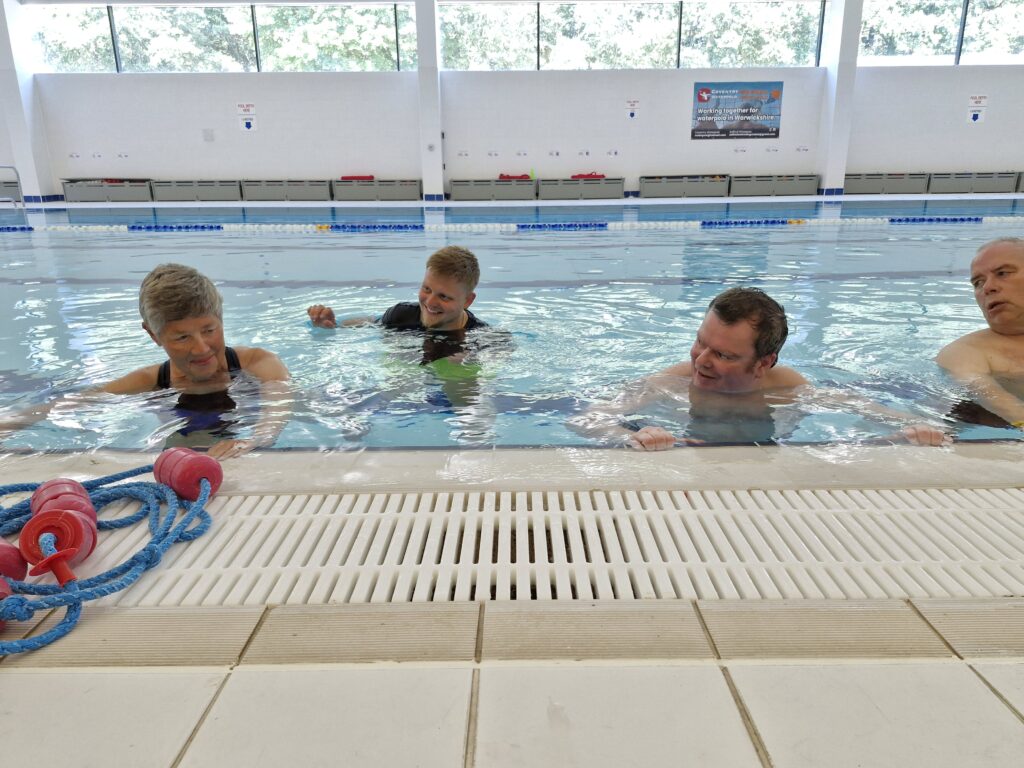
Since the relaunch of our Aquatic Exercise classes in 2024, many people have discovered the benefits of water-based exercise. We are hoping to extend these popular sessions in 2026 so even more people can enjoy what they have to offer.
Physiotherapist Dan Foley, part of the Aquatic Exercise team, discusses the benefits of water-based exercises.
What is aquatic exercise?
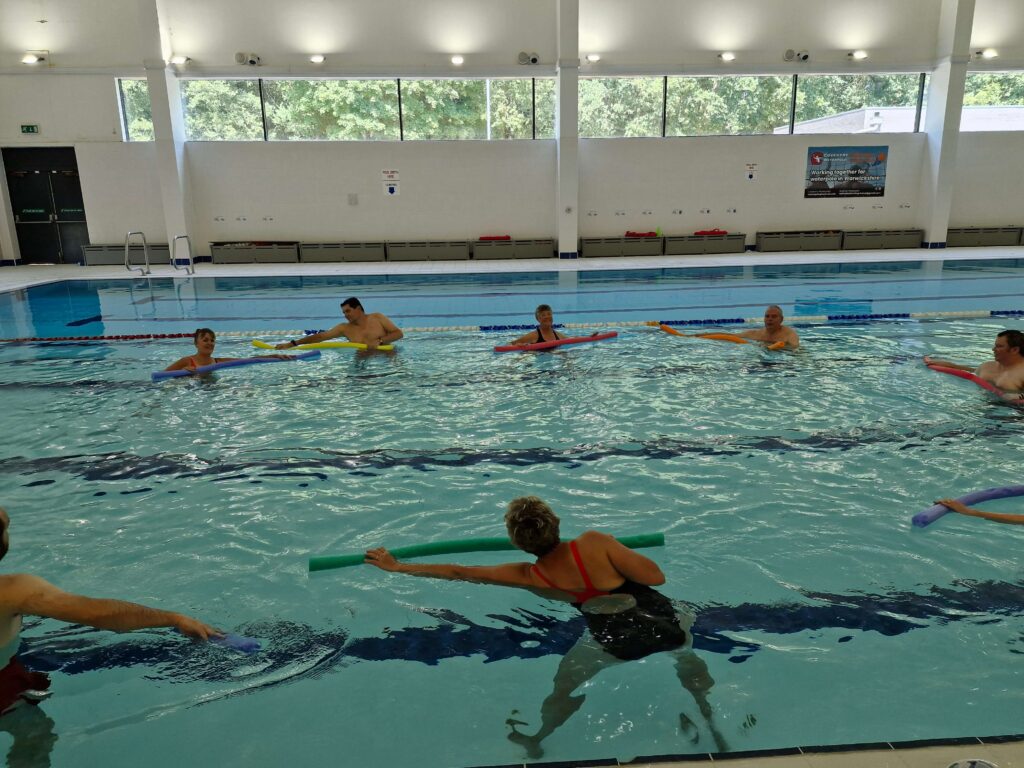
Dan explains, “Our classes involve a mix of cardio, balance, and core-strengthening exercises, all performed in water at around breastbone height. It’s different from land-based physiotherapy because the water becomes part of the exercise; it supports you, resists your movements, and allows you to explore exercises safely.”
Why water works well for people with muscular dystrophy
“The benefits are vast,” says Dan. “Mostly, the buoyancy of the water offers an element of safety, allowing service users to explore functional exercises that they would otherwise avoid on land due to falls or injury risks.
“Being submerged in water allows us to take advantage of its many properties, including buoyancy, resistance, turbulence, hydrostatic pressure, and viscosity. When combined with the right exercises, these properties support balance, strength, and flexibility. Additionally, hydrostatic pressure and viscosity can aid lung function, provide gentle compression, and help with pain management.
Benefits beyond the physical
Aquatic Exercise classes offer huge emotional and social rewards. Dan says, “Having the aquatic therapy classes to look forward to gives people an extra day out of the house, into the community, and a chance to socialise. It seems to provide a newfound sense of wellbeing. The support and conversations with therapists and fellow participants can be the lifeline some people need to keep afloat (excuse the pun).”
What are aquatic exercise classes like?
“We begin the initial session gently to assess each participant’s functional and physical abilities while allowing them to get comfortable in the water and socialise. This can help calm nerves; some service users may not have been in a swimming pool for a very long time.
“We aim to target the four main elements of function within each class: cardiorespiratory fitness, balance, flexibility and strength.
“We have two therapists in the water during each class. One therapist leads the session, while the other moves around the group, supporting individuals with exercises they find challenging and helping them achieve the intended outcomes. We also have the added support of buoyancy aids, floats and weights. Plus, the pool has a height adjustable floor to ensure the water isn’t too shallow or too deep.”
What would you say to anyone nervous about getting in the pool?
“We have worked tirelessly to ensure the process is as safe, smooth and efficient as possible. All forms of mobility aid are allowed poolside for our service users, be that mobility scooters, wheelchairs or walking frames. We also bring a four-wheeled walker for service users to use if they are normally independent but would like extra support.
“There is an accessible pool lift, and our team assists with getting in and out of the pool lift, with additional support from the leisure centre team. With two therapists in the water, one can focus on leading the session while the other supports participants. And we tailor our exercises to different levels of ability. Those who have been nervous soon find they’re having such fun their initial apprehension is soon forgotten!”
“There are accessible showers and changing rooms, and a few with individual shower sections also. We encourage participants to bring anyone they need for support with changing and showering, and these carers or partners are welcome to use the other half of the pool for a leisurely swim during the class.”
The amazing feedback
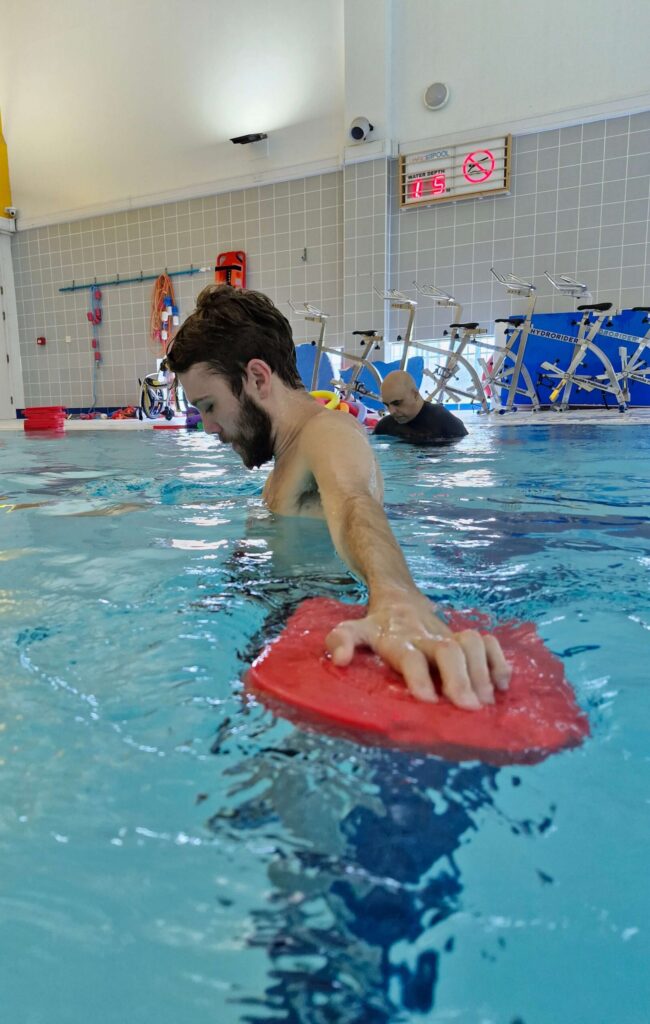
“Many participants are overwhelmed by what they can achieve in the water,” says Dan. “It’s incredible to see their confidence grow. People are often surprised by what they can do and by the positive impact on both their physical and mental wellbeing.
“That moment when someone realises just how much they’re capable of – that’s the part I love most about running these sessions. Seeing that freedom, the fun, the socialising, and the joy. It never gets old.”
Why give Aquatic Exercise a try?
“Most people will have experienced some type of pool in the past, be that hydrotherapy, aquatic therapy, or just a holiday pool. Try and reflect on your experience and feeling of weightlessness, function and comfort, and let that guide your decision. For those who may not have experience in water or are still feeling hesitant, ask us any questions you like. I promise we’ll have the answers to help you make the right decision.
“If it is appropriate for you, I can’t encourage you enough to give it a go. Everyone who has participated previously has had some level of benefit, be that function, balance, emotional or social.”
What are your hopes or plans for next year’s classes?
“That we reach more people and have more people join. Having the opportunity to continue this service for our service users is a godsend. We usually have eight to ten participants per session, but we have capacity for many more. We want to show more people how using the properties of water can unlock greater exercise, function, and long-term benefits for body and mind.”
Next year’s classes can go ahead thanks to fresh funding from an anonymous donor, which will help cover the high cost of running them. We are also having to make a small increase to the fee that we ask participants to contribute. Aquatic exercise sessions will be £15 each for anyone booking the summer block or £20 for a one off taster session. The Easter classes will be taster sessions at £20 each. For this cost, participants benefit from support from two physiotherapists, tailored exercises in the water, help with pool access, the option to stay and swim, space for carers to use the other side of the pool, and full privacy. If you would like to attend but cost is a barrier, please speak with a member of the team and we will do our best to support you.
Our 2026 Aquatic Exercise classes will return at Easter for two weeks and then in the six-week summer holidays. Keep an eye on our website and social media for confirmed dates and information on how to book your place.