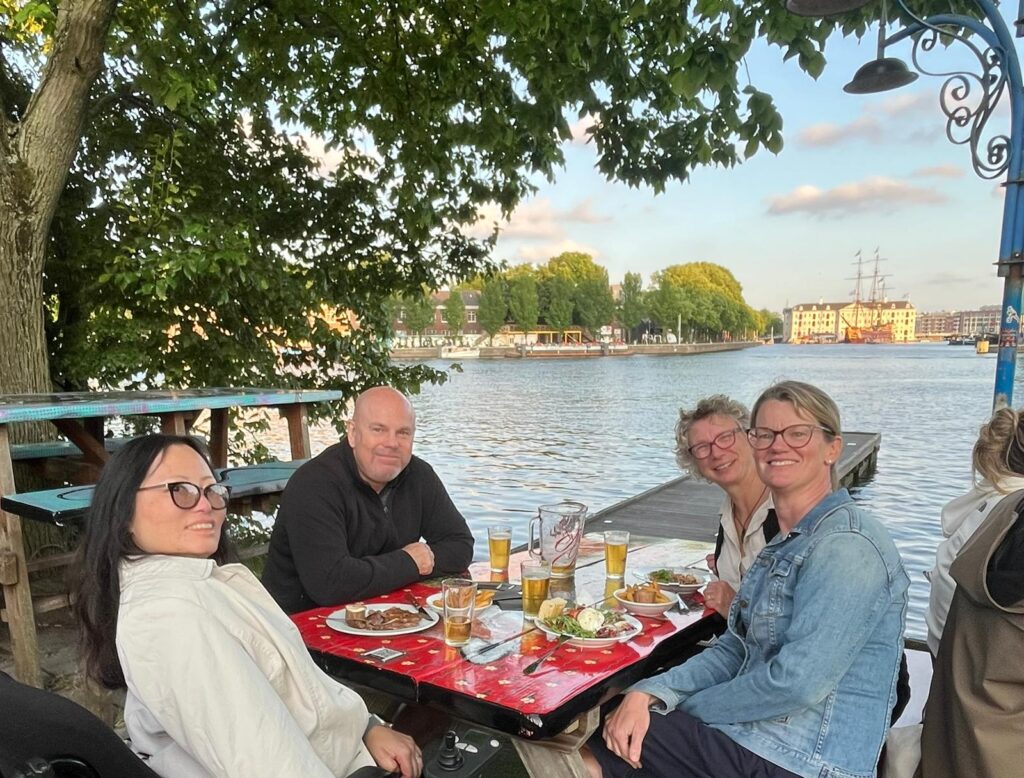

Co-Lead Physiotherapists Lynn Ward and Ulrike Uta represented MD Support Centre at the first-ever FSHD Connect Conference in Amsterdam this summer. Organised by FSHD Europe, the event brought together researchers, clinicians, and people living with FSHD from across the continent and beyond. Lynn and Ulrike were invited to give a talk on the role of physiotherapy in managing FSHD and to lead practical workshops demonstrating safe, accessible exercise for people to do at home. Here, they share their reflections on an inspiring international weekend.
The invitation came through Sheila Hawkins, Chair of FSHD Europe and a long-time participant in Ulrike’s online exercise class. A strong advocate for accessible, home-based movement, Sheila was instrumental in ensuring physiotherapy was part of the conference programme.
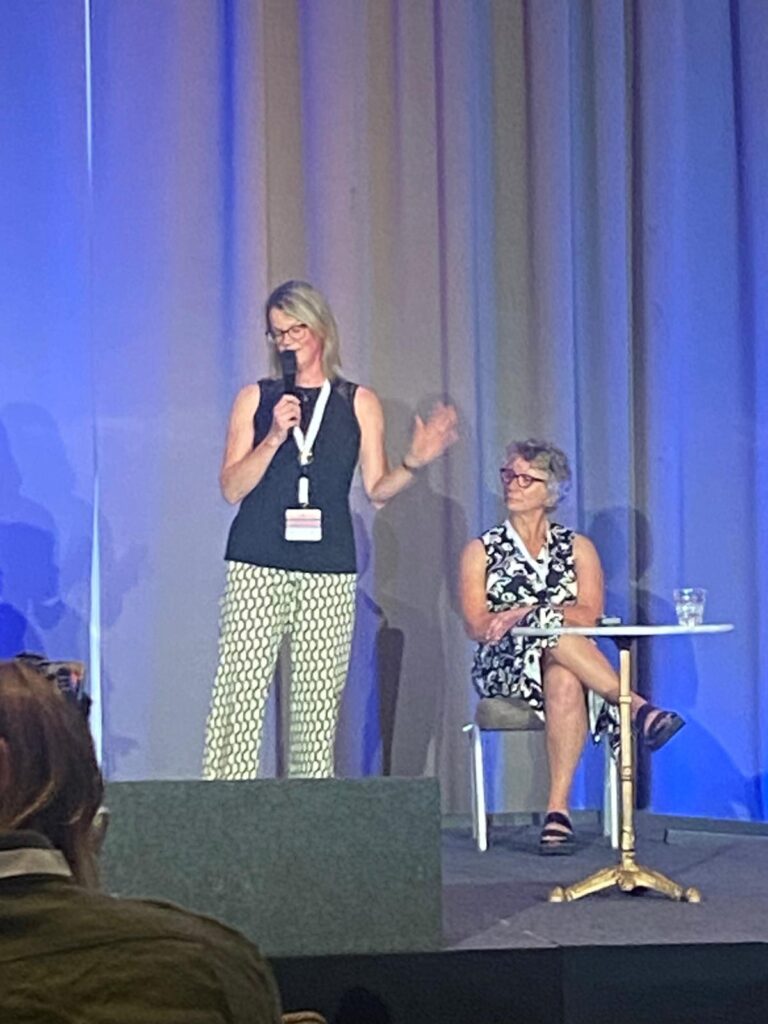
At FSHD Europe’s invitation, Lynn and Ulrike delivered a presentation and exercise workshops focused on how people with FSHD can safely and effectively exercise at home. “It was a great opportunity to share our experience of delivering physiotherapy for over a decade,” said Lynn. “We were also able to explain our approach for supporting people with muscular dystrophy, including FSHD, and highlight the positive impact regular physiotherapy and exercise can have.”
An international effort
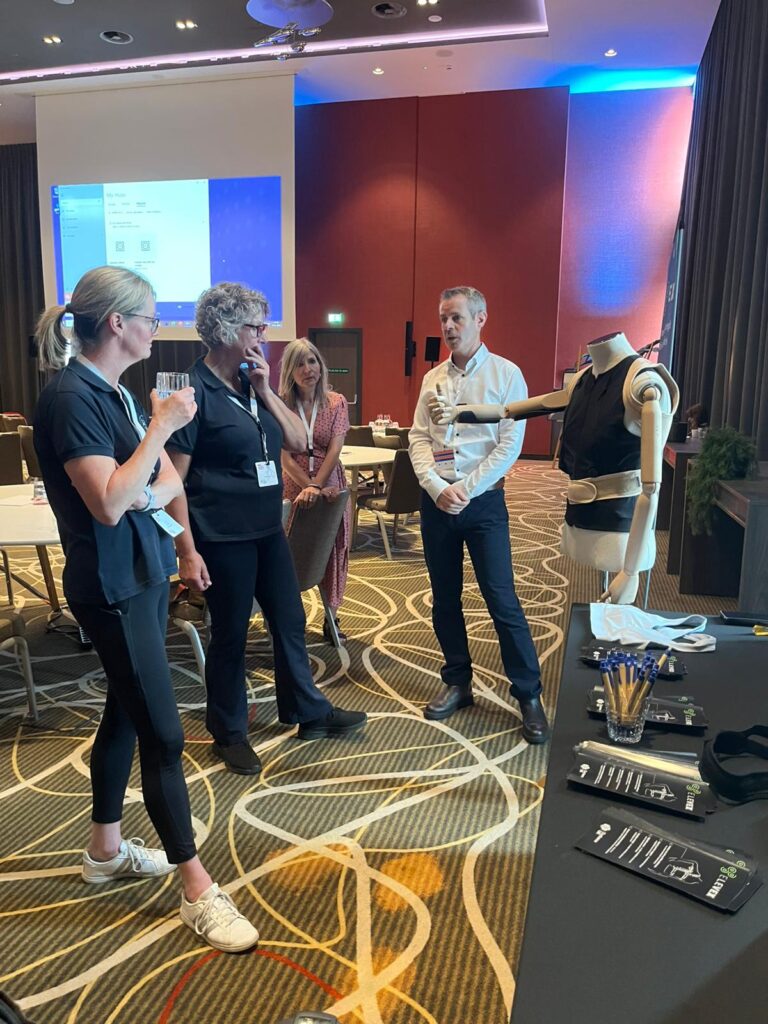
The conference brought together delegates from across Europe, including France, Spain, Romania, Denmark, Finland, and the Netherlands, as well as the US and Australia. For some, it was the first time they had met others with FSHD in person. The event included a blend of research updates, as well as peer-led sessions, and practical workshops on fatigue management, nutrition, assistive technologies, and physical activity.
Ulrike said “It was about connecting researchers and healthcare professionals across Europe and beyond and enabling people with FSHD to connect with each other. It was really powerful to see that we all share similar experiences and that we work with similar principles and strategies to manage the challenges faced by our service users.”
Highlighting the importance of exercise
The talk, ‘Physiotherapy and exercise: optimising mobility and function,’ explained how physical activity can make a difference. It discussed different types of exercises and potential difficulties, as well as offering practical guidance.
The practical workshops were based on Lynn and Ulrike’s usual online sessions, leading participants through a series of adapted exercises. The experience offered a candid reminder of how much their regular class participants have changed over time.
“I ran it the same way I’d run our Thursday morning class, but I soon realised many people weren’t familiar with that kind of activity,” said Lynn. “They don’t have the beauty of what we’re offering here. I fed back to our class the following week that they’re doing really well. It was a learning curve for me and for them. What we do here is a really good thing, and we’re all quite lucky to be able to provide it. Sometimes you feel like it’s just about keeping people going, but they are improving. The classes are a good thing, and those who attend regularly really grow and benefit from that.”
Growing in confidence
Ulrike added, “People who take part in the regular classes find them easier over time. As a result they develop better body awareness, improved fitness, and greater control. This growing fitness and confidence in physical activity make a real difference, helping to manage their symptoms more effectively and improve their day-to-day quality of life.”
Feedback from attendees was overwhelmingly positive. Many found it reassuring to hear that movement is not only possible but safe and beneficial, even for those with lower levels of ability. “Sometimes people just need the confidence to get started,” said Lynn. “They don’t necessarily need a detailed programme, they need someone to say, ‘Yes, you can move, and yes, it’s worth doing.’”
The event also highlighted a widespread issue: a lack of understanding about muscular dystrophy not just in the UK, but across Europe. “The feedback from delegates really mirrored what our own service users tell us in assessments,” said Lynn. “Most had never spoken to a physio who understood their condition. Also, many said they didn’t know what they should or shouldn’t be doing. It showed us that this gap in understanding is everywhere, and it’s a problem.”
A place to connect and learn
There were lively discussions throughout the weekend around the importance of physical activity and training. “Training really is the key at any level,” said Ulrike. “It doesn’t matter if you’re fairly active or just starting out, it’s still really important that you move regularly, push yourself a little, and keep doing what you can.”
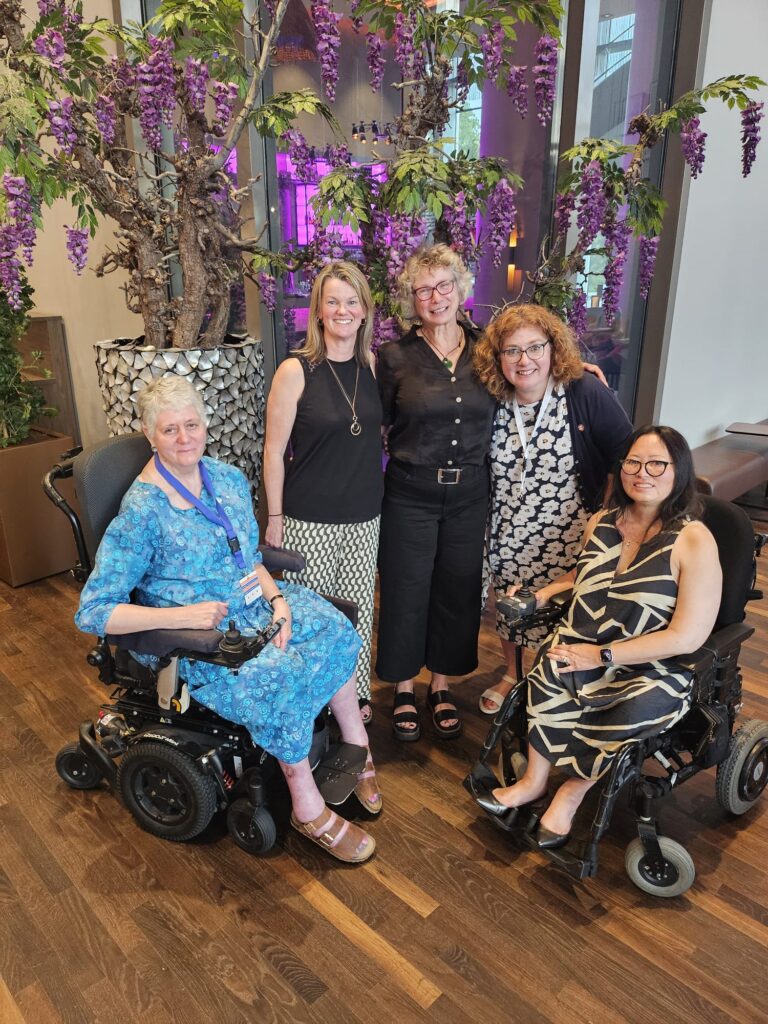
Alongside the formal FSHD Connect programme, the social aspects of the weekend played a big role. Moreover, shared meals, informal conversations, and spontaneous networking gave people space to connect, exchange stories, and build community. “For many, being in a room full of people who understand FSHD created a powerful experience,” said Ulrike.
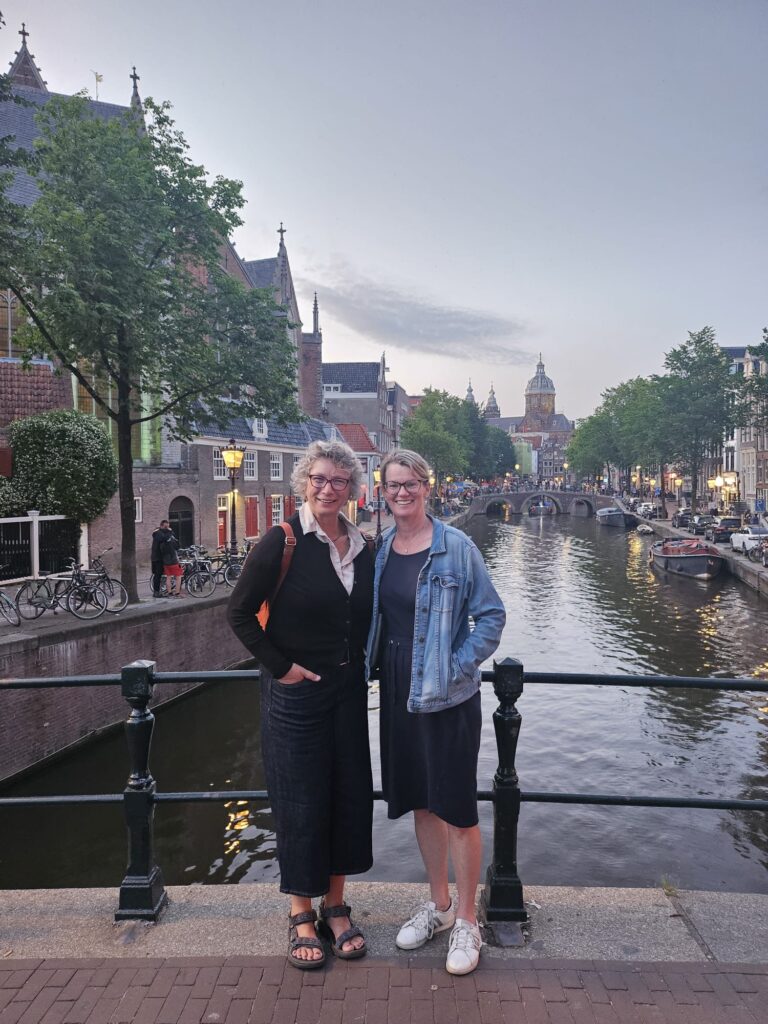
After the conference, Lynn and Ulrike took some time to explore Amsterdam. They hired bikes to see the city by cycle, then visited the Body Worlds Museum, a striking anatomical exhibition made up of real preserved human bodies donated for education and art. “It was fascinating from a physio point of view to see the muscle layers and systems so clearly,” said Lynn.
Reflecting on the experience, both felt the trip was valuable on multiple levels – for their professional growth, for the charity, and for the wider FSHD community. “If you’d told my 18-year-old self I’d be standing in front of 200 people with a microphone, I’d never have believed you,” said Lynn. “But we did it, and I’m proud of that.”
Following the success of the FSHD Connect conference, Muscular Dystrophy UK has invited the team to speak at its Allied Health Professionals Conference in Birmingham this October. This is strong recognition of their expertise and the value of sharing their knowledge more widely.